
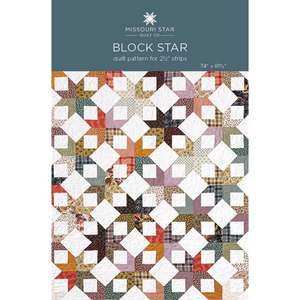
Quilt Patterns
Shop hundreds of sewing & quilting patterns and plan your next masterpiece! Sewing & quilt patterns contain detailed instructions to make a stunning project. From quilting patterns for beginners to advanced, you're sure to find the perfect quilting patterns for your next project. read more
How do I choose a quilt pattern that fits my skill level and timeline?
Match design complexity to your comfort with cutting, bias edges, and block accuracy. Beginner patterns favor squares/rectangles and repeating blocks; advanced add curves or dense units. Estimate your sewing hours and pick a block count and unit size you can finish happily. Scan diagrams—clear pressing arrows and cutting charts save time and reduce errors. Favor patterns with full‑size test blocks to validate your scant 1/4" seam. When in doubt, make a single block first and time it to extrapolate the project
length. Keep notes on adjustments so you can repeat success later.
Do patterns include yardage and can I substitute precuts for yardage?
Most patterns list yardage per color and often include alternate sizes or precut options .To substitute, match unit sizes (5", 10", 2.5") and verify the math for block finishes .Mind nap/directionality when replacing with precuts—some require extra background yardage .If a pattern isn’t precut‑friendly, cut your own to those sizes and test one block .Maintain consistent seam allowances when mixing yardage and precuts. Label baggies by block/row to prevent mix‑ups during layout. Document any conversions in the margin for future reference.
What tools and notions set me up for pattern success?
Core kit: rotary cutter, self‑healing mat, 6"×24" ruler, 12.5" square, 1/4" foot, iron, seam ripper .Add marking tools, pins or clips, a design wall/board, and a wool pressing mat for crisp seams. A sharp blade and accurate seam guide solve most piecing woes quickly. Use leaders/enders or chain piecing to speed repetitive units. Press consistently (to one side or open) per the pattern’s nesting plan. Starch or pressing spray can add stability for bias‑heavy blocks. Store block units flat in trays to protect edges.
What sizes are typically included and how do I scale a pattern up or down?
Patterns often include baby through queen/king size tables; verify finished block sizes. Scale via more blocks, wider borders/sashing, or larger units—not by changing seam allowances. Test a single scaled block to confirm math before cutting all fabric. Large quilts benefit from modular assembly (rows/sections) to keep pieces manageable. If borders exceed a single WOF, plan discreet piecing joins .Re‑measure the quilt top before cutting borders to keep them flat. Record your final measurements for label details.
How should I care for the finished quilt to keep colors bright?
Wash finished quilts on gentle with cool water and color‑catchers the first time. Dry on low or air‑dry flat to preserve fibers and prevent distortion. Press lightly to restore crispness after laundering .Store out of direct sunlight to reduce fading over time. Avoid harsh detergents or bleach that can strip dye. Repair loose threads promptly to prevent snags. Document care on a label if gifting.
What are recommended patterns for beginners?
We would recommend the Charming Beginner Tutorial and Pattern. Also the step by step Beginning Quilt Kit and tutorial.