


Quilt Batting – Cotton, 80/20, Bamboo & Wool Batting
Quilt batting in 100% cotton, 80/20 cotton-poly blend, bamboo, wool and polyester. Choose precut batting from crib to king, table runner sizes, or a 96"-wide jumbo roll of Best Blend 80/20 you can cut to any size. Shop Missouri Star Quilter’s Best Blend and Nature’s Best, Quilter’s Dream, Bosal, Pellon and more. read more
Quilt batting in 100% cotton, 80/20 cotton-poly blend, bamboo, wool and polyester. Choose precut batting from crib to king, table runner sizes, or a 96"-wide jumbo roll of Best Blend 80/20 you can cut to any size. Shop Missouri Star Quilter’s Best Blend and Nature’s Best, Quilter’s Dream, Bosal, Pellon and more.
-
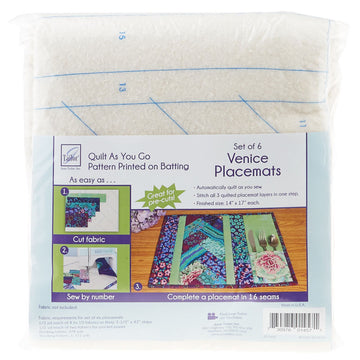 Venice Place Mat Quilt As You Go Preprinted Batting
$19.99
Venice Place Mat Quilt As You Go Preprinted Batting
$19.99
-
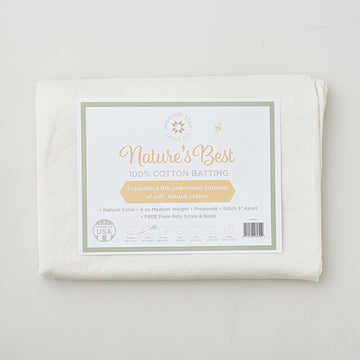 Missouri Star Nature's Best 100% Cotton Crib Batting - Natural
$11.70
Missouri Star Nature's Best 100% Cotton Crib Batting - Natural
$11.70
-
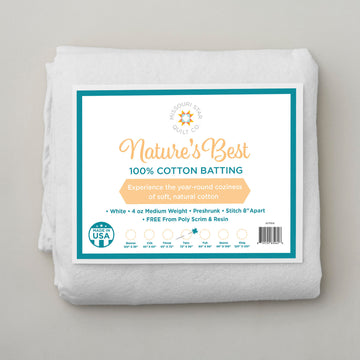 Missouri Star Nature's Best 100% Cotton Twin Batting - White
$24.70
Missouri Star Nature's Best 100% Cotton Twin Batting - White
$24.70
-
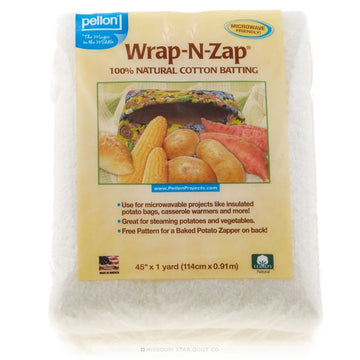 Pellon Wrap-N-Zap Batting 45"x 36" Package
$10.15
Pellon Wrap-N-Zap Batting 45"x 36" Package
$10.15
-
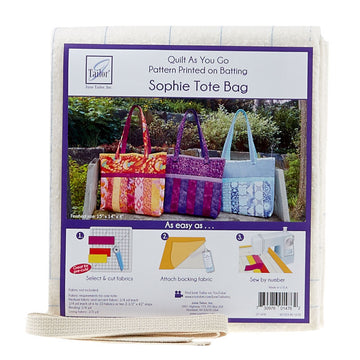 Sophie Tote Bag Quilt As You Go Preprinted Batting
$19.99
Sophie Tote Bag Quilt As You Go Preprinted Batting
$19.99
-
 Missouri Star Nature's Best Bamboo Batting - Throw
$30.95
Missouri Star Nature's Best Bamboo Batting - Throw
$30.95
-
 Bosal Katahdin 100% Organic Cotton Precut 2 1/2" x 25 Yard Batting
$17.95
Bosal Katahdin 100% Organic Cotton Precut 2 1/2" x 25 Yard Batting
$17.95
-
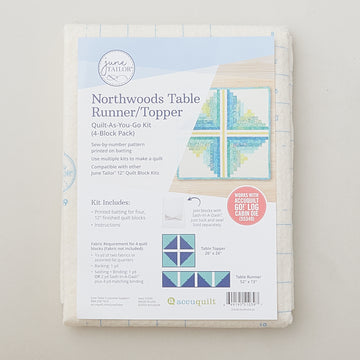 Quilt As You Go Table Runner – Northwoods 4/pack
$19.99
Quilt As You Go Table Runner – Northwoods 4/pack
$19.99
-
 Missouri Star Quilt As You Go 5" Square Batting Shapes
$26.95
Missouri Star Quilt As You Go 5" Square Batting Shapes
$26.95
-
 Quilter's Dream Natural 80/20 Select Queen Batting
$41.95
Quilter's Dream Natural 80/20 Select Queen Batting
$41.95
-
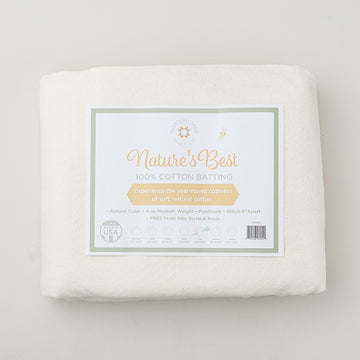 Missouri Star Nature's Best 100% Cotton Full Batting - Natural
$29.92
Missouri Star Nature's Best 100% Cotton Full Batting - Natural
$29.92
-
 Quilter's Dream Fusible Throw Batting
$21.95
Quilter's Dream Fusible Throw Batting
$21.95


Quilt Batting – Cotton, 80/20, Bamboo & Wool Batting
Get ready for some snuggles! What is batting in a quilt? It’s what makes a quilt feel cozy and soft. Quilt batting is the center layer of a quilt sandwich and it goes between the quilt top and the backing. When your quilt is finished, you won’t be able to see it, but you’ll be able to feel it!
When people ask, what is the best quilt batting to use in a quilt? We’re here to guide you through your batting options to help you choose the best batting for your quilt. First off, you’ll want to consider what type of batting is best for you. There are many different kinds of quilt batting out there (our guide to the best batting for machine quilting goes deeper), but here we’ll cover the three common quilting batting types:
Cotton quilt batting is one of the most popular kinds of batting for a reason. It’s economical, it’s easy to quilt, and it washes up well. Because it’s an all-natural fiber, cotton quilt batting has more weight per square inch than a synthetic fiber or a blended batting. When you quilt cotton batting, make sure your lines or quilting pattern is closer together than 10” so that your batting doesn’t bunch or shift. And when you’re all finished, cotton quilt batting will feel a bit stiff and needs to be washed and used to soften it up. Popular cotton battings include Missouri Star Nature’s Best 100% Cotton, Quilter’s Dream Cotton Request and Bosal Katahdin.
Cotton blend batting for quilting is usually a mix of 80% cotton and 20% polyester. This type of batting is becoming increasingly popular and it’s the kind of quilt batting we use here at Missouri Star in our machine quilting department. It’s truly the best of both worlds. Because it’s a cotton blend with mostly natural fibers, it allows your quilt to breathe and washes up beautifully. The addition of 20% polyester fibers gives the batting additional strength and allows the quilt to drape beautifully. It also reduces overall shrinkage. This type of batting also includes fusible batting, which makes pin basting unnecessary! Cotton blend battings include Missouri Star Quilter’s Best Blend (also on a 96"-wide jumbo roll), Quilter’s Dream 80/20 Select and Quilter’s Dream Fusible.
Bamboo quilt batting is made from the fibers of bamboo plants, a highly sustainable resource that grows quickly without the need for pesticides or fertilizers. Bamboo batting is known for its breathability and softness. And since bamboo has natural antibacterial and antifungal properties, bamboo batting is a hypoallergenic choice for anyone with allergies or sensitive skin.
Wool quilt batting is lightweight but warm, with a soft loft that makes hand quilting easy and shows off quilting stitches. It resists creasing, so it’s a favorite for show quilts and quilts that get folded and stored.
Finally, polyester batting is also a great option. Because it’s synthetic, it doesn’t irritate people with allergies and it’s very resilient even after frequent washing and heavy usage. It will last for years and is also resistant to mold and mildew. Polyester batting doesn’t shrink as much as other kinds and it’s available in many different lofts. We carry popular polyester quilt batting like Quilter’s Dream Poly Select, Quilter’s Dream Puff & more.
Did you know that quilt batting comes in different colors? Use white batting under bright or white quilt tops, natural under creams and medium tones, and a dark batting like Quilter’s Dream Midnight under dark fabrics, so any fibers that work through won’t show.
So how thick should quilt batting be, anyway? Well, that depends on what you prefer. The thickness of your quilt batting is referred to as loft. A 100% cotton or cotton poly blend quilt batting is generally going to be thinner, so it’s lower loft and when you quilt it, the stitches leave less of an impression in the batting for a smoother finish and a more flowing drape. A 100% polyester quilt batting is usually going to be thicker, so it’s a higher loft and when you quilt it, the stitches sink down into it, leaving a deep impression for plenty of pillowy texture. It just depends on the look you’re going for. As for quilt batting sizes, we carry a variety of sizes from crib to king, plus batting by the roll for extra-large quilts.
Here are a couple more handy tips and tricks when it comes to quilt batting. Should you pre wash quilt batting? Nope! There’s no need. It will shrink along with your fabrics when you wash your finished quilt. And, some have asked, is it OK to piece quilt batting? Yes! In fact, Jenny does it all the time. Here’s how you do it: align extra pieces of batting together and connect them with fusible seam tape using your iron. You can also connect extra batting pieces together with a wide zigzag stitch on your sewing machine. We recommend using Bosal Batting Seam Tape, Steam A Seam 2, or Scrap Tape. Once your quilt is finished, nobody will know the difference.
Use the filters to shop quality quilt batting at Missouri Star!
Quilt Batting Guides
- 80/20 vs. 100% cotton batting
- The best batting for machine quilting
- Wool vs. cotton batting for hand quilting
- Quilt batting by the roll
Quilt Batting FAQs
What size batting do I need for my quilt?
Plan for batting at least 4" larger than your quilt top on every side, so 8" wider and 8" longer overall. Longarm quilters usually ask for that extra room. Missouri Star Quilter’s Best Blend comes in crib (45" x 60"), throw (65" x 72"), twin (72" x 96"), full (90" x 96"), queen (108" x 96"), king (120" x 120") and bed/table runner (120" x 36"). Measure first: one reviewer bought a lap size for a lap quilt and came up 6" short.
Will my quilt batting shrink?
Most natural-fiber batting shrinks a little the first time you wash the finished quilt. 100% cotton shrinks the most, which gives that soft, crinkly heirloom look many quilters love. An 80/20 blend shrinks less; our Best Blend jumbo roll is rated at 2–3%. Customers who washed baby quilts made with Best Blend say they came out softer with little to no shrinkage. Polyester barely shrinks at all.
Should I use 80/20 or 100% cotton batting?
Both are great. 80/20 drapes well, shrinks less and is the batting our own machine quilting department uses; Best Blend can be quilted up to 8" apart. 100% cotton is all natural, breathes well and crinkles up after washing for a traditional look. Several reviewers who always used 80/20 tried Nature’s Best 100% cotton and were won over by how soft it is. Our 80/20 vs. 100% cotton batting guide compares them side by side.
Is fusible batting worth it?
If you dislike pin basting, yes. Fusible batting lets you press the quilt sandwich together with an iron so the layers don’t shift while you quilt. Customers like it most for baby quilts and projects twin size or smaller. Check the label before you buy: some fusible battings, like Quilter’s Dream Fusion, are fusible on one side only.
Which batting is best for hand quilting, and will it beard?
Bearding is when batting fibers work through the quilt top, and it shows most on dark fabrics. Reviewers report little to no bearding with Best Blend and Quilter’s Dream Select, and hand quilters say both needle easily. Wool is light, lofty and easy to hand quilt, though one reviewer saw fuzzies on a finished wool-batted quilt. See wool vs. cotton batting for hand quilting.